

Every executive today faces the same strategic crossroads: invest heavily in AI to stay competitive, or risk being left behind. Yet this framing may be the very reason many AI strategies fail. The companies thriving with AI are not those with the largest budgets or most advanced models—they are those that resist the urge to lead with technology.
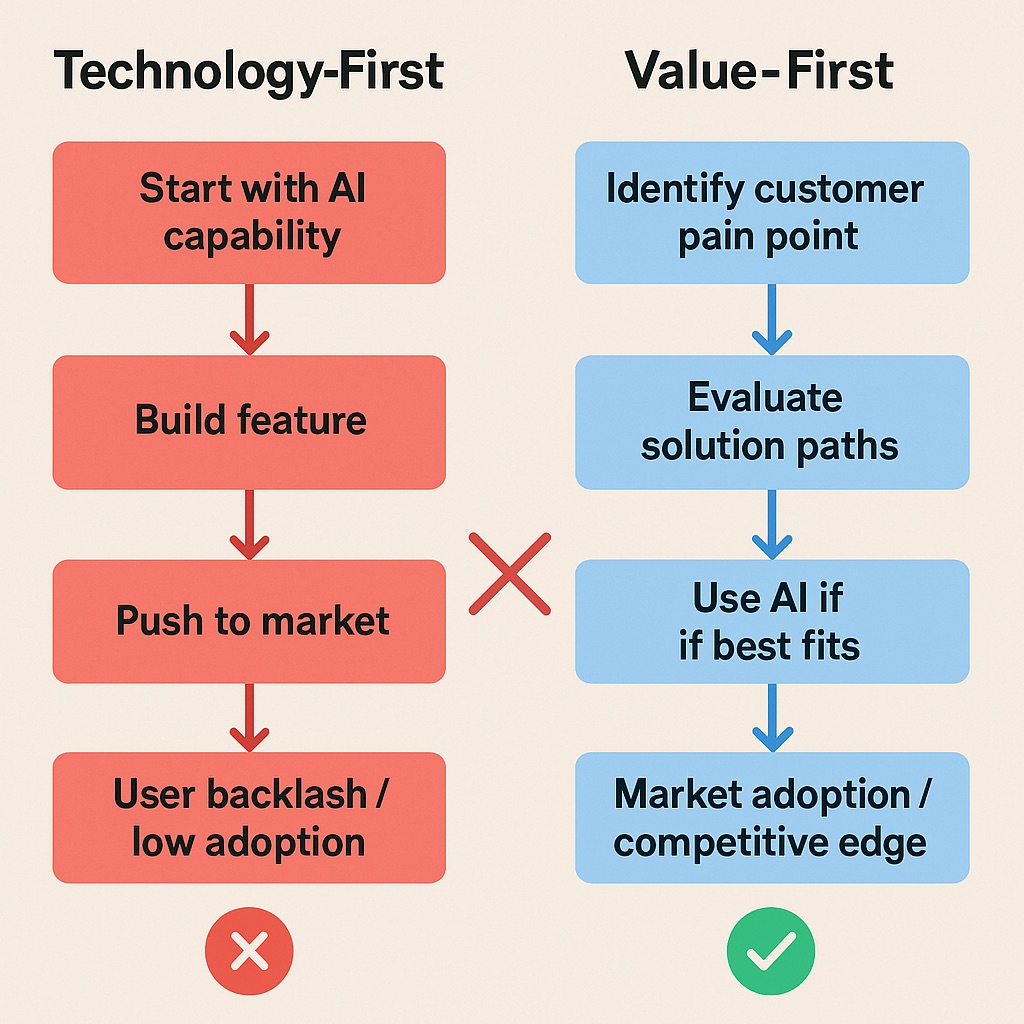
The Technology-First Trap
The promise of AI seduces leadership teams into forgetting a simple truth: technology without clear value destroys more advantage than it creates.
Take Snapchat’s rollout of My AI in 2023. Despite hundreds of millions of daily users, the AI chatbot triggered backlash—iOS ratings collapsed to 1.67 stars, and Google searches for “delete Snapchat” spiked nearly 500%.
The failure wasn’t technical. It was strategic. Snapchat assumed novelty equaled value. They never asked why users would need—or want—the feature.
This reflects a broader error: treating AI as inherently valuable rather than as a means to deliver specific competitive advantage.
Value-First Architecture
The companies gaining ground follow a different playbook: start with value gaps, not AI capabilities.
Yunji Technology’s hotel delivery robots are a case in point. They didn’t begin with robotics R&D. They began with a friction point—hotel security protocols forcing guests to trek to lobbies for deliveries. Only then did they design AI-enabled robots to solve it.
The results are striking:
- 90% market share in Chinese hotel robotics
- 30,000 hotels in 20+ countries
- Hotels report a 27% boost in positive reviews, with 35% including user photos
The success wasn’t about robots. It was about solving a specific, high-friction problem with AI as the enabler.
The Competitive Imperative
AI agents are reshaping how customers discover and evaluate offerings. Instead of relying on brand familiarity, they surface best-fit options—large or small—based on objective value.
That raises the stakes:
- Companies that use AI to amplify core value will see their strengths magnified in AI-driven markets.
- Companies that chase AI for its own sake may find their weaknesses exposed—at scale, and in real time.
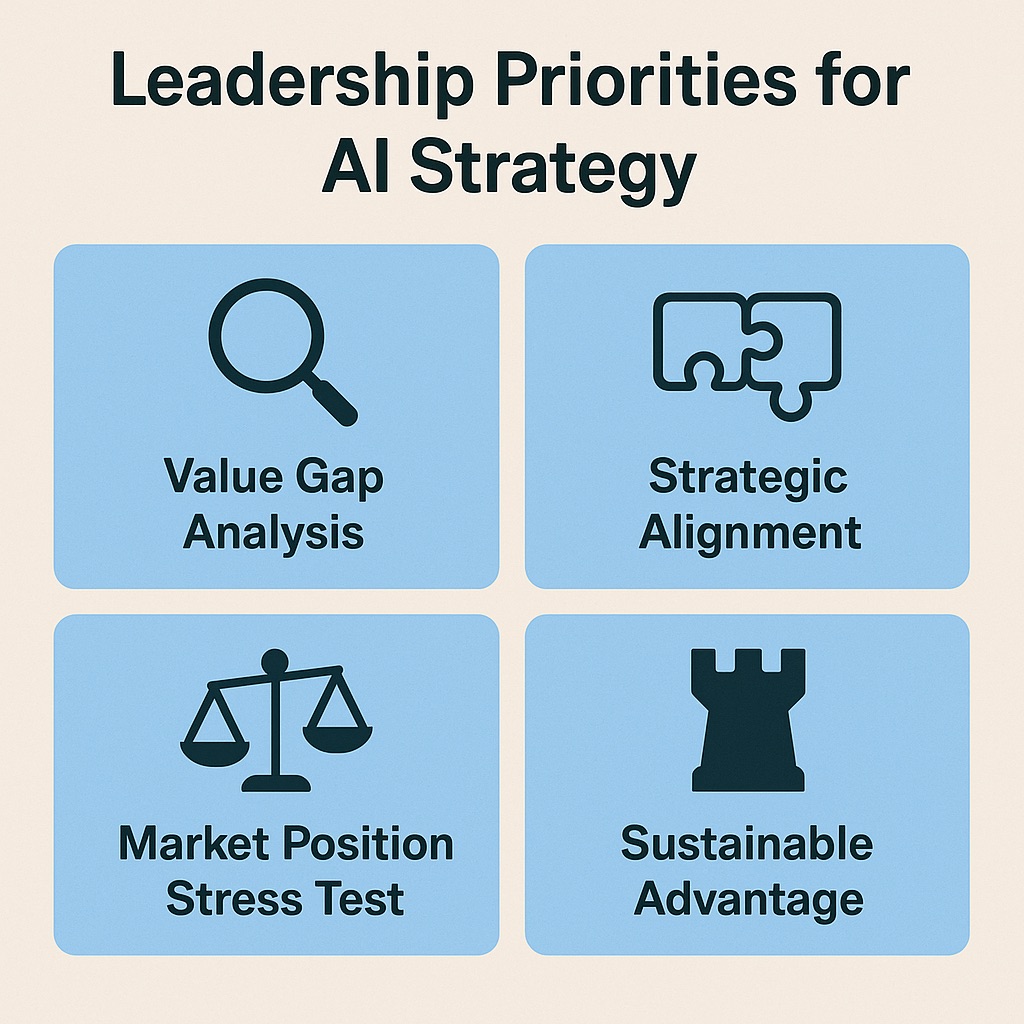
Four Disciplines for Leaders
Executives must reframe AI decision-making around four disciplines:
- Value Gap Analysis – Identify unmet needs and inefficiencies first.
- Strategic Alignment – Ensure AI strengthens, not dilutes, core differentiation.
- Market Position Stress Test – Ask: would our AI-enabled offering rank best-in-class if compared transparently?
- Sustainable Advantage – Distinguish between durable moats and temporary parity.
Closing Reflection
The winners of the AI economy won’t be those with the most sophisticated technology. They will be those with the discipline to use AI selectively, in service of real value.
And perhaps the harder—but more strategic—question for leaders is not “What can AI do for us?” but rather:
“Which problems are worth solving with AI at all?”
Leave a Reply